

Burnout Therapy: Signs, Recovery and Support Online and in London
Burnout is a state of deep physical and emotional exhaustion caused by long-term stress that has not been managed, most often at work. It leaves you drained, detached and doubting yourself, but you can recover. At Feeling To Healing, our team of qualified therapists offers burnout therapy for adults at our East London clinic and by secure video anywhere in the world.
If you wake up already tired, dread the working day or feel numb about things you used to care about, you may be closer to the edge than you realise. You are not lazy or weak. This page explains the signs, how it differs from stress and depression, what causes it, and how therapy helps you recover.
Book your free 20-minute consultation Book a session
On this page
- What it is
- Signs
- Stress, burnout or depression?
- What causes it
- Who is at risk
- Effects on body and relationships
- Recovery: five steps
- How therapy helps
- Stopping it coming back
- Counselling online or in London
- What you can try this week
- Talking to your employer and time off
- When to get urgent help
- Fees
- Frequently asked questions
What Is Burnout? Meaning and Definition
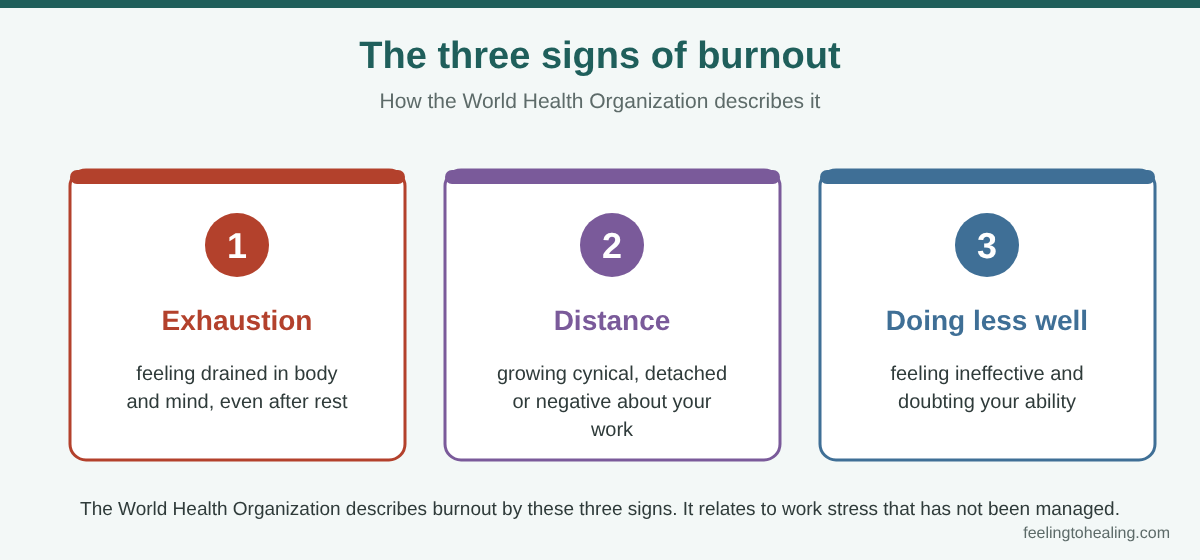
The World Health Organization describes burnout as an occupational phenomenon, not a medical condition. It results from chronic workplace stress that has not been successfully managed. In everyday life, many people use the word for any long period of overwhelm in which they have run out of energy.
Common
Many hard-working people reach this point, often without noticing until it is serious.
Not a weakness
It is what happens when demands stay higher than your resources for too long.
Recoverable
With rest, change and the right support, most people get their energy back.
Signs of Burnout
The signs of burnout build slowly, so they are easy to miss. You may notice some of these:
- Exhaustion. You feel drained all the time, and sleep and weekends do not help.
- Detachment. You feel cynical, resentful or numb about your work, colleagues or clients.
- Feeling ineffective. You doubt your ability, make more mistakes and feel nothing you do is enough.
- Mental fog. You find it hard to concentrate, decide or remember things.
- Physical symptoms. Headaches, muscle tension, stomach problems, frequent colds and poor sleep.
- Mood changes. Irritability, anxiety, tearfulness or feeling flat.
- Withdrawing. You cancel plans, avoid people and lose interest in hobbies.
- Coping in unhelpful ways. More alcohol, caffeine, junk food or screen time to get through the day.

If you recognise several of these signs, take them seriously. Our mental health check-up can help you see the whole picture.
Stress, Burnout or Depression?
The three overlap, which is why they are often confused. These differences can help, but only a professional can tell you for certain.
- Stress is feeling that you have too much to cope with. You are often tense, worried and over-busy, and you still believe that things will improve once the pressure eases.
- Burnout is feeling that you have nothing left. You are empty, detached and hopeless about your work, though other areas of life may still bring some pleasure.
- Depression affects your whole life, including sleep, appetite, interest and self-worth, and does not simply lift when work improves.
Left unaddressed, it can lead to depression or anxiety, so it is wise to get help early. See our pages on depression and anxiety.
What Causes Burnout?
It is mostly caused by the way work is organised, not by personal failings, though personality and habits can make it more likely. Research points to six areas where a mismatch between you and your job builds up stress:
- Workload. Too much to do, too little time and no letting up.
- Control. Little say over how, when or what you do.
- Reward. Pay, recognition or thanks that do not match your effort.
- Community. Isolation, conflict or lack of support from colleagues or managers.
- Fairness. Favouritism, bullying or unclear rules.
- Values. Doing work that clashes with what matters to you.
Habits such as perfectionism, people-pleasing, difficulty saying no and tying your self-worth to achievement can speed things up. Home pressures, caring duties and money worries add to the load. The Health and Safety Executive offers guidance on work-related stress.
Who Is at Risk of Burnout?
Anyone can reach this point, but some situations raise the risk. People in caring and helping jobs, such as healthcare, teaching and social care, face constant emotional demands. Managers, business owners and freelancers often carry heavy responsibility with little downtime. Perfectionists and high achievers push themselves hard, and people who find it hard to say no take on more than anyone could manage.
Home life matters too. Parents, carers and people who are managing money worries or relationship strain may be running on empty before the working day starts. If you recognise yourself in any of these groups, noticing the early signs gives you a better chance of stopping it in time.
How Long-Term Overload Affects Body and Relationships
Constant stress keeps your body on alert. Over weeks and months this can disturb sleep, weaken your immune system, raise tension and headaches, and affect your digestion and heart health. Your mood suffers as well, and many people become more anxious, tearful or short-tempered than usual.
Relationships often take the strain. You may have nothing left to give at home, snap at people you love, or stop seeing friends. Partners and family can feel shut out. Therapy gives you space to look at how overload is affecting the people around you, and how to ask for the support you need.
Burnout Recovery: Five Steps Back to Energy
Recovery takes time, and you will probably need to change something, not only rest. These five steps give you a path.
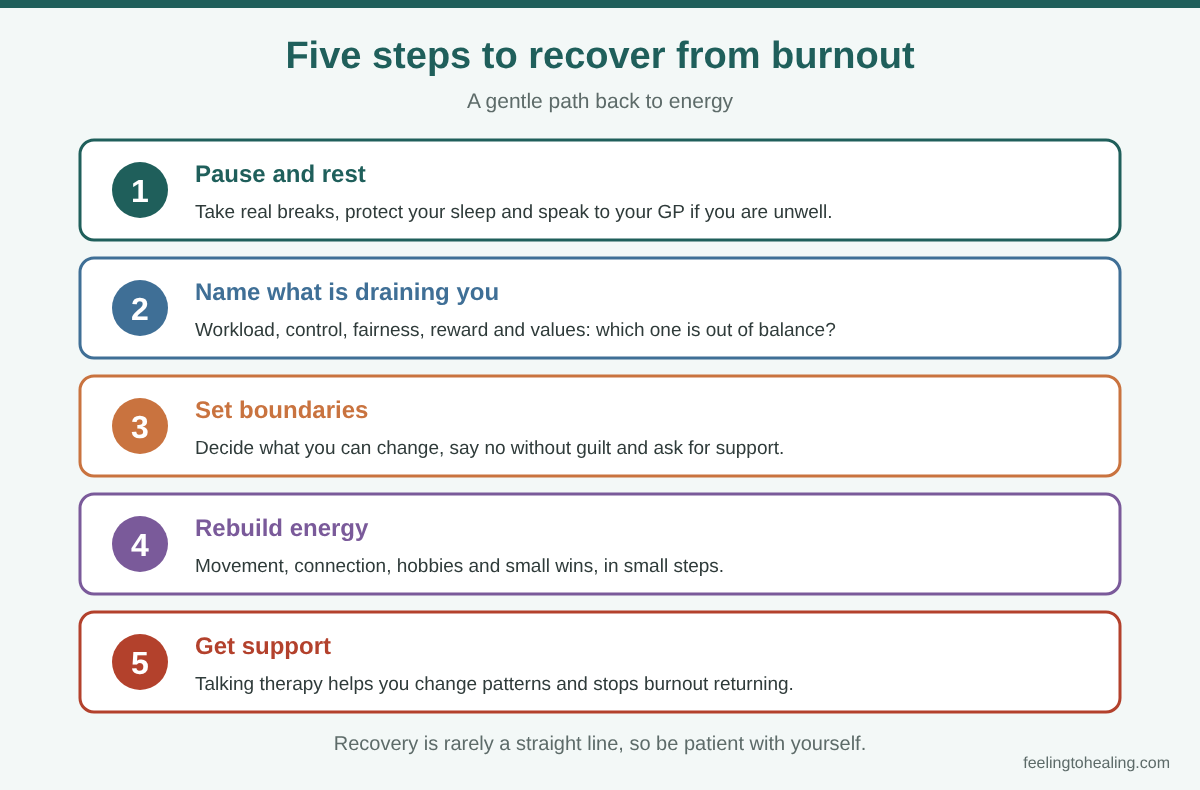
- Pause and rest. Take real breaks, protect your sleep, and see your GP if you feel unwell.
- Name what is draining you. Look at the six areas above and spot which are out of balance.
- Set boundaries. Decide what you can change, practise saying no, and ask for the support you need.
- Rebuild energy. Add movement, time outdoors, friends and hobbies in small steps.
- Get support. A therapist can help you see patterns, change them and avoid sliding back.
How Burnout Therapy Helps
Therapy is a confidential space to step back from the daily rush and make sense of what has happened. Your therapist does not tell you to quit or to push on. Together you look at what is draining you and what you can realistically change. Common approaches include:
Understanding
Make sense of how stress built up and how it shows in your body, thoughts and behaviour.
Changing habits
Work on perfectionism, overworking and people-pleasing with cognitive behavioural therapy.
Calming your system
Learn relaxation and mindfulness skills that settle stress and sleep.
Values and direction
Clarify what matters to you and plan changes at work or beyond.

Sessions last 55 minutes, one to one. Many people notice some relief within the first few sessions, simply from having space to talk, and then build on it. Our team also offers hypnotherapy for relaxation and sleep, which some people find useful alongside talking therapy.
Stopping It From Coming Back
Recovering is one task, and staying well is another. Many people return to the same pace and the same habits once they feel better, so the pattern repeats. Therapy helps you turn what you have learned into everyday routines, such as realistic limits on your hours, regular check-ins with yourself, and a clear list of your own early warning signs.
You may also decide to make bigger changes, such as a different role, a different way of working or a fresh set of priorities. Your therapist can help you weigh those choices at your own pace, without pressure.
Burnout Counselling Online or in London
When you are exhausted, getting to an appointment can feel like one more demand. That is why many people choose counselling by secure video. You can join from home or a private space, in English, from anywhere in the world, without commuting. We send a session joining link with a reminder, and sessions are not recorded. Read more on our telehealth page.
If you prefer to meet in person, you are welcome at our clinic at 106 Empress Avenue, London E12 5EU.
What You Can Try This Week
These small steps will not fix everything, but they can take some pressure off while you decide what else to do.
- Protect one thing. Choose one boundary, such as no email after a set time, and keep to it.
- Take proper breaks. Step away from your desk at lunch, and walk outside if you can.
- Move a little. A short walk helps stress hormones settle.
- Write it down. List what is on your plate, then mark what can wait, be shared or be dropped.
- Tell someone. Speak to a friend, your GP or a therapist, rather than coping alone.
- Go easy on alcohol and caffeine. They can seem to help but make sleep and mood worse.
The NHS Every Mind Matters site has more practical advice on stress.
Talking to Your Employer and Time Off
Deciding whether to tell your employer is personal. You do not have to share details of therapy. You may find it helpful to describe the impact, such as workload or hours, rather than a label, and to suggest changes you need. Your GP can advise on time off work and can provide a fit note if needed. We can help you plan what to say and think through your options, including a phased return.
Therapy with us is private. We do not contact your employer unless you ask us to.
When to Get Urgent Help
If you are thinking about ending your life or harming yourself, call 999 or go to A&E. You can also call Samaritans free on 116 123, day or night, or NHS 111. Our clinic is not an emergency service. See our page on suicidal thoughts.
Fees
Your first 20-minute consultation is free. Sessions last 55 minutes, and our session fees are on our fees page. We do not bill insurance companies. You pay us directly and receive a receipt after each session, which you can send to your insurer if your policy covers therapy.
Burnout Therapy: Frequently Asked Questions
What is burnout?
Burnout is a state of physical and emotional exhaustion caused by long-term stress that has not been managed, usually at work. The World Health Organization describes it as feeling drained, becoming negative or detached from your job, and feeling less effective. It is not a medical diagnosis, but it can seriously affect your health.
What are the first signs of burnout?
Early signs include constant tiredness that rest does not fix, dreading work, feeling irritable or numb, trouble concentrating, headaches, poor sleep and pulling away from other people. If you notice several of these for more than a few weeks, it is time to get support.
What is the difference between stress and burnout?
Stress usually means feeling you have too much to cope with, often with urgency and worry. Burnout is closer to running out: you feel empty, flat and detached. Prolonged stress can lead to it if nothing changes.
Is burnout the same as depression?
No, but they overlap. It is tied to work and can ease when the pressure is reduced, while depression affects all areas of life and does not lift so easily. It can lead to depression, so it is worth getting checked. Read about therapy for depression.
How long does it take to recover from burnout?
It varies. Mild cases may ease in a few weeks with rest and changes, while severe cases can take many months. Recovery is usually quicker when you act early and address the causes as well as the exhaustion.
Can therapy help with burnout?
Yes. Talking therapy helps you understand what led to burnout, change habits such as overworking and perfectionism, set boundaries and rebuild energy and confidence. It also reduces the risk of it returning.
What type of therapy is best for burnout?
There is no single best type. Cognitive behavioural therapy (CBT), mindfulness-based approaches and skills-based therapy are commonly used. We agree an approach with you in the first sessions and adjust it as you go.
Can I have therapy online?
Yes. Sessions are by secure video, in English, for adults anywhere in the world, so you can fit them around a demanding schedule without travelling. You can also come to our East London clinic.
Do I need to take time off work?
Not always. Some people recover with changes at work, and others need a break. Your GP can advise on time off and a fit note. We can help you think through your options and prepare for conversations with your employer.
Will my employer know I am in therapy?
No. Therapy is confidential, and we do not contact your employer unless you ask us to. There are rare legal limits to confidentiality, which we explain in your first session.
Can it happen if I love my job?
Yes. It is often about the conditions of work, such as workload, lack of control or lack of recognition, rather than the work itself. Passionate, conscientious people are often at higher risk.
Can parents and carers get it?
Yes. Caring for children, family members or others without enough rest or support can lead to the same exhaustion and detachment. Our sessions are open to anyone dealing with long-term caring stress.
Will a holiday fix it, or do I need therapy?
A holiday can help, but if the exhaustion returns within days of going back, the causes are still there. Therapy helps you change the patterns and pressures behind it, so a break is not just a pause before the same problems return.
What happens in a first session?
We talk about what has been happening, how it affects your sleep, health and relationships, and what you would like to change. You leave with a clearer picture and, usually, a few simple things to try. Your first 20-minute consultation is free.
Do you work with children or teenagers?
No. Our service is for adults only.
How much does therapy cost?
Your first 20-minute consultation is free. Sessions last 55 minutes and our session fees are on our fees page. We do not bill insurance companies. You pay us directly and receive a receipt after each session, which you can send to your insurer if your policy covers therapy.
How do I book?
Start with a free 20-minute consultation. You can book online, call us on +44 203 996 1510 or send a message through our contact page.
Start Getting Your Energy Back
Book your free 20-minute consultation to talk about what is wearing you down and what could help. It is confidential, and you will be listened to without judgement.
You may also find these helpful: anxiety treatment, therapy for depression, mental health check-up, online therapy and our FAQs.
This page is for general information and is not a substitute for professional medical advice, diagnosis or treatment. Last updated November 2026.