
Therapy for Depression in London and Online
Therapy for depression at Feeling To Healing is confidential, one-to-one psychological therapy for low mood, hopelessness and loss of interest, led by Consultant Psychologist Dr Carlo Demarco. Choose depression therapy in London at our East London clinic, or online depression therapy by video from anywhere in the UK. We use the approaches recommended by NICE, including CBT for depression, behavioural activation and depression counselling, and every new client starts with a free 20-minute consultation.
Clinically reviewed by Dr Carlo Demarco, PhD, Consultant Psychologist. Last updated October 2026.
Do you wake up already tired of the day ahead? Have the things you used to enjoy started to feel flat and pointless? Perhaps thoughts like “I am a burden”, “I can’t do anything right” or “nothing will ever change” keep coming back. These are common signs of depression, not signs of weakness. Depression is one of the most treatable mental health problems, and with the right support most people start to feel like themselves again.
Book your free 20-minute consultation Book a therapy session
On this page
How Common Is Depression in the UK?
You are far from alone. Office for National Statistics surveys between 2021 and 2023 found that around 1 in 6 adults in Great Britain reported moderate to severe depressive symptoms, and Mind’s mental health statistics report that around 4 in 100 people in England are living with depression in any given week. It affects people of every age and background, including many who seem to be coping perfectly well on the outside.
Because depression drains your energy and your belief that things can improve, many people wait months or even years before asking for help. The sooner you get support, the easier it usually is to turn things around.
Signs and Symptoms of Depression
Everyone feels sad or low from time to time. Depression is different: the low mood lasts most of the day, nearly every day, for two weeks or more, and it starts to affect your work, your relationships and the way you look after yourself.

How you feel and think
- Persistent sadness, emptiness or hopelessness
- Feeling worthless, guilty or a burden to others
- Losing interest in things you used to enjoy
- Irritability, tearfulness or feeling numb
- Difficulty concentrating or making decisions
Changes in your body
- Sleeping much more or much less than usual
- Constant tiredness and low energy
- Changes in appetite or weight
- Aches and pains with no clear cause
- Moving or speaking more slowly
Changes in your life
- Avoiding friends, family or social plans
- Falling behind at work or with daily tasks
- Drinking or using more to cope
- Letting go of hobbies, exercise and routines
You do not need to have every symptom. If several of these sound familiar and they have lasted for more than two weeks, it is worth talking to a professional.
Types of Depression We Help With
Depression can look very different from one person to the next. Our therapy for depression helps adults with:
- Clinical (major) depression: low mood or loss of interest most of the day, nearly every day, for at least two weeks.
- Persistent depressive disorder (dysthymia): a milder but long-lasting low mood that can go on for years and start to feel like “just who you are”.
- Postnatal depression: depression in the year after having a baby, which can affect mothers and fathers. See our counselling for new mothers.
- Seasonal affective disorder (SAD): depression that comes and goes with the seasons, usually in autumn and winter.
- Depression with anxiety: one of the most common combinations. See our anxiety treatment page.
- Depression after loss, trauma or addiction: including grief, trauma and addiction.
Some forms of depression, such as depression in bipolar disorder or depression with psychotic symptoms, also need medical care from your GP or a psychiatrist. We will always tell you honestly if another service would suit you better.
What Causes Depression?

There is rarely a single cause. Depression usually grows from a mix of what is happening in your life, in your body and in the way you have learned to see yourself. Common triggers include:
- Stressful life events, such as bereavement, a relationship breakdown, redundancy or money worries
- Long-term stress, burnout, loneliness or feeling unsupported
- Difficult childhood experiences or trauma
- Physical illness, long-term pain or hormonal changes, such as after having a baby or during the menopause
- A family history of depression
- Alcohol or drug use
- A harsh, self-critical or perfectionist way of thinking
Sometimes depression appears without any obvious reason. That is not your fault, and it does not mean therapy cannot help. Part of our work together is understanding what keeps your low mood going now, because that is what we can change.
Evidence-Based Therapy for Depression: What the Guidelines Say
The NICE guideline on depression in adults (NG222) recommends psychological therapy as a first choice for many people. For less severe depression, NICE lists options including guided self-help, group or individual CBT, behavioural activation, mindfulness and meditation, counselling and short-term psychodynamic therapy. For more severe depression, NICE recommends individual CBT or behavioural activation, often combined with antidepressant medication from your GP or psychiatrist.
The NHS guide to depression in adults explains these options in more detail. At Feeling To Healing, every plan is built on these proven approaches and shaped around your history, your goals and the way you like to work.
CBT for Depression: How It Helps
CBT for depression (cognitive behavioural therapy) is structured and practical. It looks at the links between what you think, how you feel and what you do, and at the vicious circles that keep low mood going. In CBT you learn to:
- Notice and question harsh, hopeless or all-or-nothing thoughts
- Break the cycle of withdrawal and low energy with small, planned activities (behavioural activation)
- Tackle problems one step at a time instead of feeling overwhelmed by them
- Build a kinder, more balanced way of talking to yourself
You usually try small tasks between sessions, and you keep these skills for life. Read more about cognitive behavioural therapy at our clinic.
Depression Counselling and Other Approaches
Depression counselling gives you a safe, unhurried space to talk through what you are carrying, such as a loss, a relationship problem or a big life change, and to make sense of your feelings with someone who listens without judging. It can be especially helpful when your depression is linked to a clear event or to long-standing patterns in your life.
Depending on your needs, we may also draw on:
- Mindfulness-based therapy, to step back from rumination and reduce the risk of depression coming back
- Values and goal work, to reconnect with what matters to you, using our goal-setting approach
- Practical support for sleep, activity, nutrition and routine
- NLP techniques for confidence and motivation, used only as a complement to evidence-based therapy
Many people benefit from a blend of CBT and counselling. At your free consultation we talk about what you need and agree the approach that suits you.
How Therapy for Depression Works at Feeling To Healing
1
Free 20-minute consultation
A relaxed, no-obligation conversation about how you have been feeling and what you want to change. Ask anything you like.
2
Assessment and your plan
In your first full session we explore your symptoms and history, then agree clear goals and the right approach for you.
3
Weekly sessions
In 55-minute sessions, in person in London or online, you learn practical skills to lift your mood, rebuild motivation and quieten self-criticism.
4
Review and stay well
We track your progress together and finish with a personal plan to spot early warning signs and keep you well.
You do not need to prepare anything for your first session, and you only share what you feel ready to share. Many people feel some relief simply from being heard and having a plan. Progress is not always a straight line, and setbacks are a normal part of recovery, so we adjust the plan as we go. NICE treats this kind of relapse prevention as an important part of care, especially if you have had depression before.
Online Depression Therapy
Online depression therapy works in the same way as sessions in the clinic, over a secure video call. It suits you if you live outside London, have a busy schedule, find it hard to leave the house when your mood is low, or simply feel more comfortable at home.
Research shows that psychological therapy delivered by video can be as effective as face-to-face sessions for depression. All you need is a private space, a phone, tablet or computer and an internet connection. Read more about our online therapy sessions.
Depression Therapy in London: Our Clinic
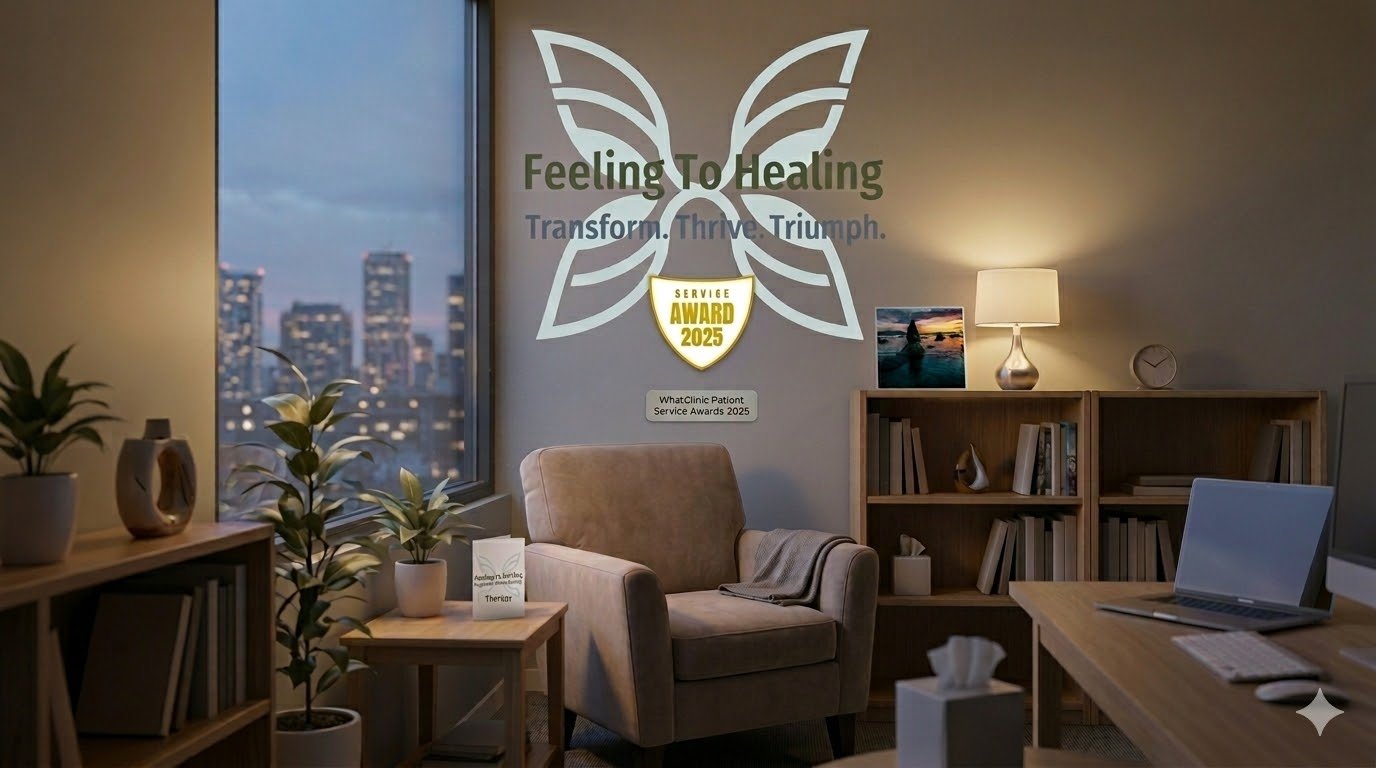
If you prefer to meet in person, we offer depression therapy in London at our clinic at 106 Empress Avenue, London E12 5EU, in East London. Sessions take place in a calm, private therapy room, and you can switch between in-person and online sessions whenever your needs change.
Who We Help
- Adults with ongoing low mood, emptiness or loss of motivation
- People whose depression comes with anxiety, panic or poor sleep
- Professionals with burnout, or anyone planning a return to work after time off
- New mothers and fathers with low mood after the birth of a baby
- People coping with grief, trauma, illness or a relationship breakdown
- Men who find it hard to talk about how they feel (see men’s mental health)
- Clients who prefer sessions in Italian or German as well as English
Meet Your Therapist: Dr Carlo Demarco
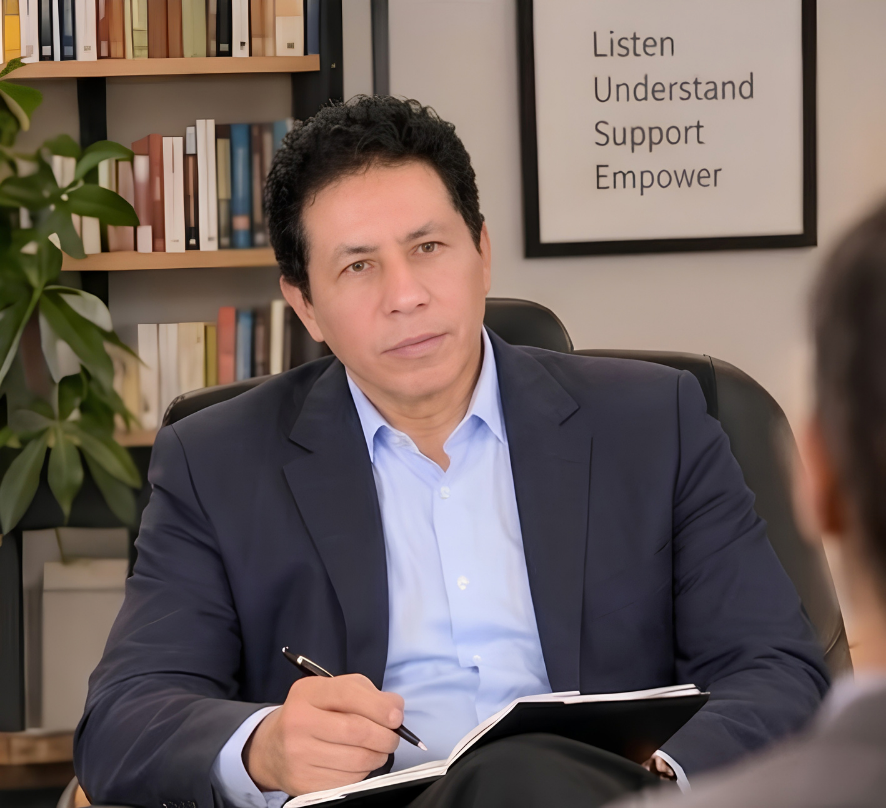
Your therapy is led by Dr Carlo Demarco, Consultant Psychologist, who holds a PhD in Psychology from the University of Texas and has more than 30 years of clinical experience. He is also an NLP Master Practitioner and a Certified Professional Life Coach, and he works in English, Italian and German.
Dr Demarco combines evidence-based therapy with a warm, practical style, so you leave each session with something you can use. View Dr Demarco’s profile.
Why Choose Feeling To Healing?
- A free 20-minute consultation for every treatment, so you can ask questions and see if we are the right fit, with no obligation.
- An experienced Consultant Psychologist with more than 30 years of clinical practice.
- Evidence-based care built on the therapies NICE recommends, with holistic support for sleep, routine and lifestyle.
- Your choice of setting: depression therapy in London at our East London clinic, or online depression therapy from home.
- No GP referral and no waiting list: you can book directly at a time that suits you.
- A plan made for you, reviewed regularly so you can see your progress.
Self-Help Tips Alongside Therapy
Small, steady steps can make a real difference while you are in therapy:
- Keep a simple daily routine for getting up, eating and going to bed.
- Plan one small activity each day that used to give you pleasure or a sense of achievement, even if you do not feel like it at first.
- Move your body every day. A short walk outside counts.
- Stay in touch with at least one person you trust.
- Cut down on alcohol, which can make low mood worse.
- Try the free tools on NHS Every Mind Matters.
Self-help is a good start, but if your low mood lasts longer than two weeks or keeps coming back, therapy for depression gives you structured, professional support.
How to Support Someone With Depression
If someone you care about is struggling, you do not need to have all the answers. Listen without judging, let them know you are there, and gently encourage them to speak to their GP or a therapist. Practical help, such as cooking a meal or going for a walk together, can mean a lot. Look after yourself too, and if you are worried about their safety, use the urgent help details below.
When to Seek Urgent Help
Therapy is not an emergency service. If you feel unable to keep yourself safe, call 999 or go to A&E now. You can call Samaritans free on 116 123, day or night, or call NHS 111 and choose the mental health option. You can also read about our support for suicidal thoughts.
Frequently Asked Questions About Therapy for Depression
How do I know if I need therapy for depression?
If you have felt low, empty or hopeless most days for two weeks or more, or you have lost interest in things you used to enjoy, it is worth speaking to a professional. You do not need to wait until things feel unbearable, and a free 20-minute consultation is an easy first step.
What type of therapy is best for depression?
NICE recommends CBT for depression and behavioural activation as leading talking therapies, with counselling, mindfulness-based therapy and short-term psychodynamic therapy as other options. The best choice depends on you, and we agree it together at your free consultation.
Can depression be treated without medication?
Many people with less severe depression improve with talking therapy alone. For more severe depression, NICE suggests therapy combined with medication. We never advise stopping prescribed medication, so please talk to your GP about any changes.
How many sessions will I need?
It varies. Many people notice a difference within 6 to 8 sessions, and a full course of CBT for depression is often 8 to 16 weekly sessions. We review your progress regularly, so you always know where you stand.
Is online depression therapy as effective as face-to-face?
For most people, yes. Research shows video therapy can work as well as in-person sessions for depression, and it saves travel time. You can choose online sessions, sessions at our London clinic, or a mix of both.
How much does therapy for depression cost?
Your first 20-minute consultation is free. After that, each therapy session lasts 55 minutes, and our fees are on our rates page. We do not bill insurance companies directly: you pay us for each session and we give you a receipt, so if your health insurance covers therapy you can claim the cost back from your insurer.
Do I need a GP referral?
No. You can book directly with us. If a medical check or medication might help, we may suggest that you also speak to your GP.
Is depression counselling confidential?
Yes. What you share stays between you and your therapist. The only exception is a serious risk to your safety or someone else’s, when we may need to involve other services, and we would normally discuss this with you first.
Can I have therapy if I take antidepressants?
Yes. Therapy and medication often work well together, and NICE recommends combining them for more severe depression. Keep taking your medication as prescribed and let your therapist know what you are taking.
What is the difference between sadness and depression?
Sadness is a normal reaction to a difficult event and usually eases with time. Depression lasts longer, at least two weeks, affects most areas of your life and often comes with tiredness, poor sleep, low self-worth and losing interest in things you used to enjoy.
What if I find it hard to talk?
That is very common, and you can go at your own pace. Many people find it easier to start online from home, and some like to jot down a few notes before a session. Your therapist will help you find the words.
How do I book depression therapy in London or online?
Start with a free 20-minute consultation. You can book online at a time that suits you, call us on +44 203 996 1510 or send a message through our contact page.
Take the First Step Towards Feeling Like Yourself Again
Depression can make even small steps feel hard. Reaching out is one of the bravest things you can do, and you do not have to do it alone. Book your free, confidential 20-minute consultation and we will help you find your way forward.
You may also find these helpful: five strategies for tackling depression, psychologist consultations and all our therapy services in London.
This page is for general information and is not a substitute for professional medical advice, diagnosis or treatment. Reviewed by Dr Carlo Demarco, Consultant Psychologist, October 2026.