

Five Depression Tackling Strategies

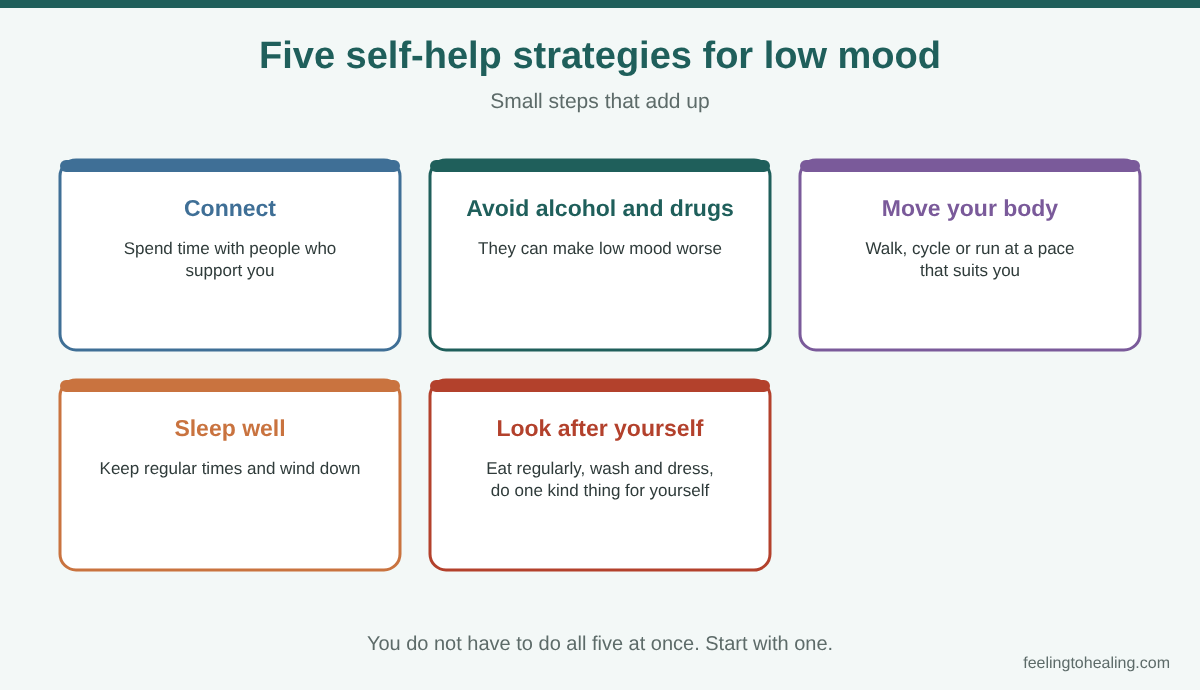
Depression self-help strategies can ease low mood, and they are one answer to how to overcome depression, but they work best alongside professional support. Five steps that help many people are connecting with others, avoiding alcohol and drugs, exercising, sleeping well and caring for yourself. If low mood lasts or you feel unsafe, please reach out. Your first 20-minute consultation with us is free.
Book your free 20-minute consultation Book a session
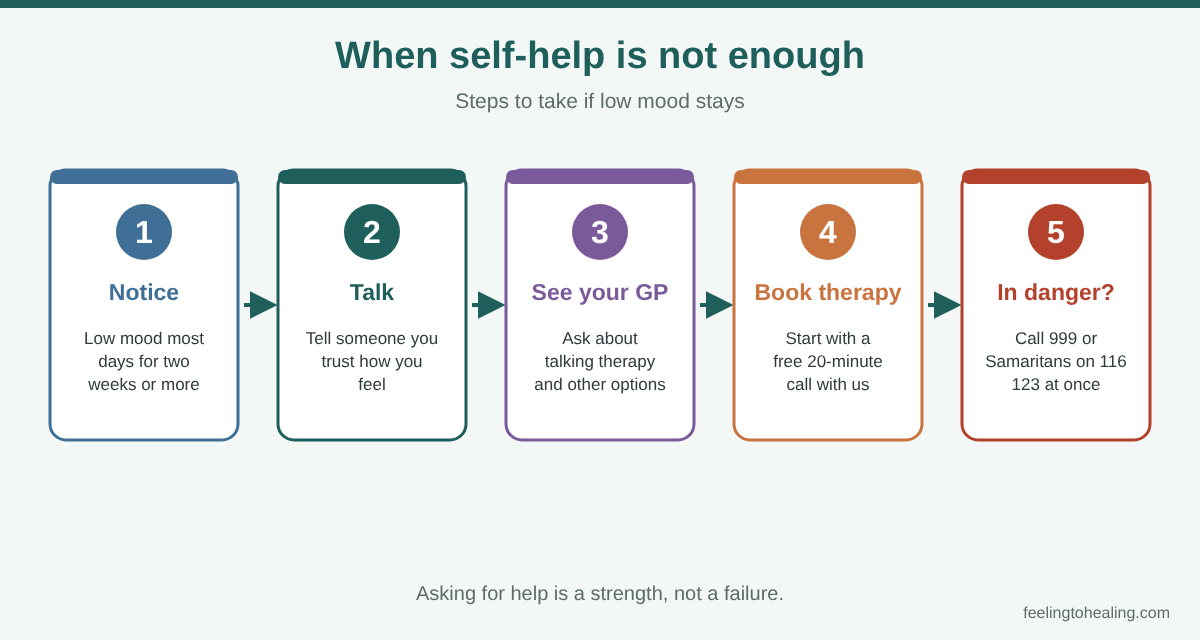
If you are thinking about harming yourself, or you are in danger, call 999 or contact Samaritans free on 116 123, at any time. Our clinic is not an emergency service.
On this page
It’s important to try a number of proven self-help methods in order to overcome depression. Some good strategies include exercising, getting enough sleep, creating social connections, and spending time outside.
Depression is a debilitating mental health condition that causes feelings of sadness and hopelessness. People often require counseling, medication or a combination of the two to manage their depression. Self-help strategies can also be helpful in reducing symptoms and improving day-to-day function in people with this condition. Get educated on 5 tips that should improve your mood.
1. Connect with others
Loneliness and depression are often related, so connecting with others can be helpful in alleviating feelings of sadness. Find others who share similar interests and commit to spending time with them and doing activities that you enjoy. You can connect with others through group exercise classes, church groups, or other local events.
Social connections can be helpful to anyone who is feeling down or struggling with depression. One study found that loneliness and social isolation are linked–conclusively proving that social connections are an important intervention for the relief of depression.
2. Don’t use drugs or alcohol
Depression and alcohol or substance abuse often occur together and addiction can start if a person uses these substances for too long. Alcohol, stimulants, and other drugs may provide relief from symptoms of depression, but dependence can gradually form over time. That’s why you should avoid these substances to keep your mental health functioning at its best.
Research shows that depression and substance use problems often occur together. This is because having alcohol or drugs can become a coping mechanism during difficult times. Alcohol and drugs can also cause more social and personal dysfunction in those with this mental health condition. If the individual abstains from drug and alcohol use, they may be able to prevent these consequences and help them make recovery possible.
If you’re feeling depressed or anxious, you may think about suicide. If you are currently experiencing suicidal thoughts or tendencies please call 999 or contact Samaritans free on 116 123
3. Exercise
If you’re looking for one quick change that will have an immediate impact on your health and look fantastic in those form-fitting jeans, get up and get moving!
When someone is depressed, exercise can be a great solution that can help improve symptoms and enhance well-being. One study found that high-intensity exercise like HIIT has a significant positive impact on depression, with aerobic and moderate-intensity aerobic exercise doing the same within long-term studies. Cutting out regular physical activity can make things worse, so combining an active lifestyle with your treatment can be beneficial to your health.
Running, biking, or walking at a challenging pace can be especially effective for improving depression because high-intensity exercises have the greatest impact. Attending aerobic exercise classes and taking spinning classes outdoors or swimming can also be beneficial.
4. Sleep well
Many people look for quick fixes for sleep at night, but the honest truth is there are few shortcuts. For best results, use our sleep hygiene tips.
Many people with depression find themselves not being able to sleep. Others sleep excessively. Sleep hygiene for depression includes prioritizing sleep, creating a consistent sleep schedule, and ensuring time for adequate sleep. The National Sleep Foundation recommends young adults and adults get seven to nine hours of sleep per night, while older adults should get seven to eight hours of nightly rest.
5. Take care of yourself
Depression self-care is an important part of the healing process. For example, taking time to bathe and dress nicely can help you feel better and have more confidence in yourself. And it can also help you avoid developing financial problems that make you even sadder. Daily tasks such as checking your mail or paying bills should not be a chore during a depression, so try to do them on a regular basis to make your mood better in the long run.
An important measure for anyone who suffers from depression is to adhere to a balanced diet that provides nutrients for their body. Diet can be especially important for those with depression, as one study found that a healthy diet reduced the risk of it in women by 29% and 17% in men.
There are many self-help strategies that people can use to help themselves, but sometimes they need more. If you’re struggling with co-existing addiction and depression, Boca Recovery Center has locations in Florida, Indiana, and New Jersey that can give you caring, personal treatment for both of those issues. Call them today to discuss your addiction and depression treatment options.
Getting Professional Help for Depression
Depression self-help strategies work best when they are small and regular. Use depression self-help strategies as a daily habit, not a test you can fail, and add professional help if they are not enough. Depression and exercise, regular sleep and time with people you trust all help, and they are a good start on how to overcome depression. Even so, depression is a medical condition that often needs more. Good sleep hygiene for depression and a habit of choosing to connect with others when depressed are worth keeping up alongside treatment.
Self-help is a good start, but depression is a medical condition that often needs more. NICE recommends talking therapies such as cognitive behavioural therapy, and in some cases medication, which your GP or a psychiatrist can prescribe. We offer talking therapy only. See our page on therapy for depression for how we can help, and read the NHS guide to depression.
Depression Self-Help: Frequently Asked Questions
Which depression self-help strategies work best?
The depression self-help strategies with the best support are regular exercise, a steady sleep routine, staying connected with others and avoiding alcohol. Start with the one that feels easiest, and ask for help if your mood does not lift.
How can I overcome depression on my own?
Many people find that small, regular steps help: staying connected, moving your body, keeping a sleep routine and avoiding alcohol. If your mood does not lift after a couple of weeks, talk to your GP or a therapist.
Does exercise really help depression?
Yes. Depression and exercise are well linked in research, and regular activity can improve mood and energy. Even a short daily walk is a good place to start.
What is sleep hygiene for depression?
It means keeping regular sleep and wake times, a calm wind-down routine and a dark, cool bedroom, and limiting screens and caffeine late in the day. Our page on sleep problems has more.
When should I get professional help?
If low mood lasts more than two weeks, affects work, relationships or sleep, or you have thoughts of harming yourself, please get help. In an emergency call 999.
Can I have therapy for depression online?
Yes. We offer sessions by secure video from anywhere in the world, in English, or in person in London.
How do I book?
Start with a free 20-minute consultation. You can book online, call us on +44 203 996 1510 or send a message through our contact page. Sessions last 55 minutes, in person in London or by secure video from anywhere in the world.
Depression Self-Help Strategies Work Better With Support
Talk to one of our therapists about what you are going through. Your first 20-minute consultation is free, with no obligation.
You may also find these helpful: more than depression self-help strategies: therapy for depression, loneliness, suicidal thoughts and stress management.
This article on depression self-help strategies is for general information and is not a substitute for professional medical advice, diagnosis or treatment. Last updated November 2026.