

Understanding Hypnosis: Facts and Myths

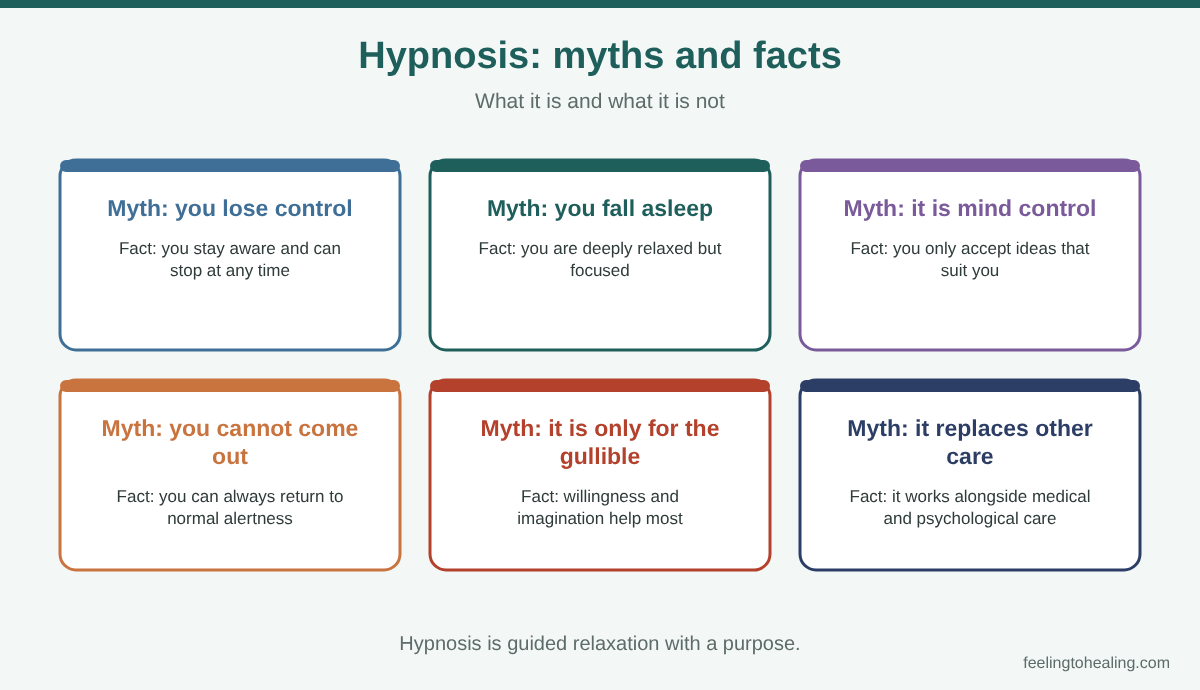
Hypnosis facts and myths are easy to mix up. Hypnosis is a natural, focused state of attention, like being absorbed in a film or a book. You stay aware and in control, and you cannot be made to do anything against your will. Our hypnotherapists explain more here, and your first 20-minute consultation is free.
Book your free 20-minute consultation Book a session
On this page
- Common Misconceptions About Hypnosis
- What is Hypnosis?
- Conscious vs. Subconscious Mind
- The Power of Suggestion in Hypnosis
- Hypnosis Requires Consent
- Brain Activity During Hypnosis
- Examples of Hypnosis in Everyday Life
- The Role of the Hypnotherapist
- Methods to Induce Hypnosis
- The Science of Hypnosis
- Hypnosis in Daily Life
- Hypnosis and Religion
- Self-Hypnosis and Auto-Suggestion
- Who Can Be Hypnotized?
Common Misconceptions About Hypnosis
Hypnosis often attracts attention, whether used for therapy or entertainment, leading to a range of opinions. One group consists of professionals such as psychologists, hypnotherapists, and mental health providers who understand its effects on human behavior. The other group includes those influenced by superstitions and misconceptions about hypnosis.
What is Hypnosis?
Hypnosis is widely recognized by behavior specialists as an altered state of mind, similar to daydreaming or dreaming during sleep. For instance, when you watch a movie, a sad scene might make you cry even though it’s fictional. This emotional response occurs because the suggestion of sadness bypasses your conscious mind and taps into your subconscious mind, inducing an altered state.
Conscious vs. Subconscious Mind
Your conscious mind uses logic, while your subconscious mind responds emotionally. In hypnosis, the conscious mind’s critical thinking is bypassed, allowing suggestions to directly influence the subconscious. This is why you might experience sadness while watching a movie, even though you know it’s not real.
The Power of Suggestion in Hypnosis
The subconscious mind responds to suggestions—whether they’re true or false. For example, hypnosis can help manage pain during childbirth or dental procedures. It’s also used in movies to evoke emotions, making hypnosis a tool for both therapeutic and entertainment purposes.
Hypnosis Requires Consent
Hypnosis cannot happen without your permission. When watching a sad movie, for instance, you expect to feel emotions, and this expectation creates a prelude to hypnosis. You cannot be hypnotized against your will, and hypnosis does not overrule your free will.
Brain Activity During Hypnosis
Hypnosis triggers specific brain activity, similar to what happens during deep meditation or dreaming. It amplifies your imagination and occurs when the brain is overloaded with sensory input, like focusing deeply on a task or thought.
Examples of Hypnosis in Everyday Life
You may have experienced light hypnosis when you’re so engrossed in thought while driving that you miss a turn. This happens because your mind was focused on internal thoughts, bypassing external stimuli.
The Role of the Hypnotherapist
A hypnotherapist guides clients into hypnosis, helping them bypass their conscious mind and access the subconscious. Suggestions given during hypnosis may or may not be accepted by the subconscious, but they cannot force negative or harmful behavior.
Methods to Induce Hypnosis
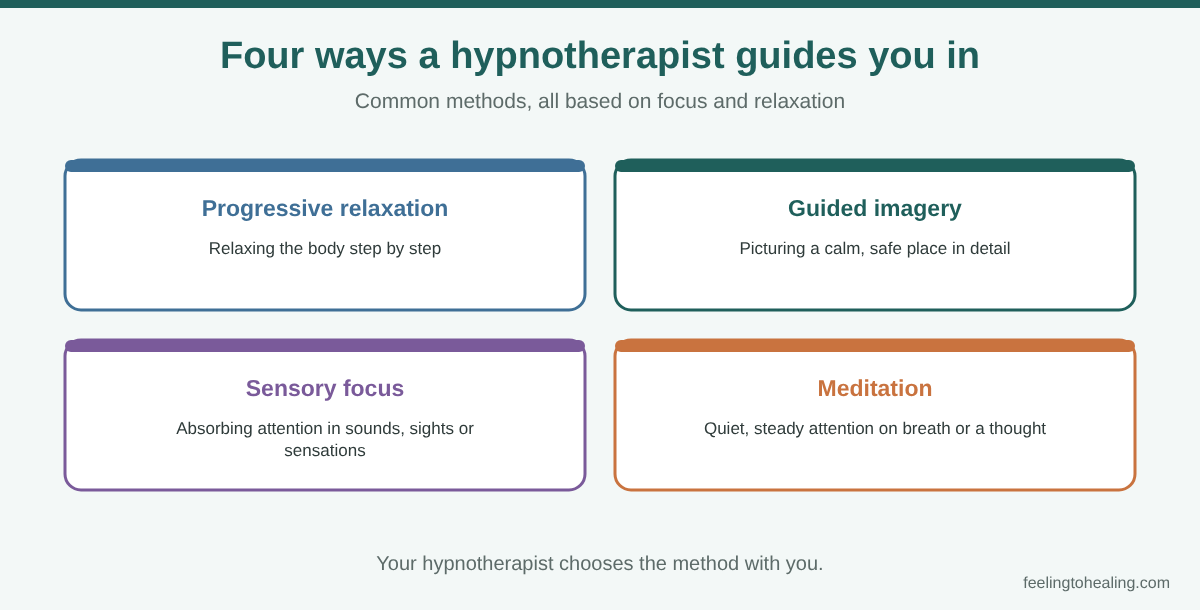
Several techniques are used to induce hypnosis, including:
- Progressive relaxation
- Guided imagery
- Overloading the senses
- Meditation or prayer
The Science of Hypnosis
Hypnosis, particularly when used in therapy (hypnotherapy), is backed by scientific research and is widely taught in universities. It is used for pain management, overcoming fears, and modifying behaviors like teeth grinding or smoking cessation. Both the American Medical Association and the American Psychological Association endorse clinical hypnosis as a safe and effective practice.
Hypnosis in Daily Life
Most people enter a light hypnotic state daily, whether through deep thought, watching a movie, or reading a book. You might laugh at a comedian’s performance because their exaggerated actions bypass your conscious mind’s logic, making the humor more impactful.
Hypnosis and Religion
While some religious groups oppose hypnosis, the majority support it for therapeutic use. Hypnosis is often mistaken for the trance state seen in religious or cult rituals, but these are unrelated phenomena. The fears about hypnosis being linked to evil forces or demonic possession are rooted in ignorance and superstition.
Self-Hypnosis and Auto-Suggestion
All hypnosis is technically self-hypnosis, meaning that the individual allows themselves to enter the state. A hypnotherapist simply guides the process. Self-hypnosis can be learned, but most people prefer professional guidance to achieve the desired state.
Who Can Be Hypnotized?
Most people can be hypnotised. Those who may struggle with hypnosis include individuals with severe intellectual disabilities, extreme resistance due to belief systems, or certain psycho pathological disorders.
Control During Hypnosis
Even when in a hypnotic state, individuals retain control over their actions and can exit hypnosis at any time. A person in hypnosis remains aware of their surroundings and retains all bodily functions. Post-hypnotic suggestions can be used for repeated therapy, helping individuals overcome phobias or unwanted behaviors.
Conclusion
Hypnosis is a scientifically validated and safe method used by professionals to help clients achieve their goals, modify behaviors, and improve their well-being. It is a valuable therapeutic tool that has widespread support in both the medical and psychological communities.
Is Hypnosis Safe?
When it is carried out by a trained and qualified practitioner, hypnosis is considered safe for most adults. You stay in control and can open your eyes at any time. It is not suitable for everyone, for example people with some serious mental health conditions, so please tell your hypnotherapist about your health and any medication.
Separating hypnosis facts and myths matters because fear of the unknown stops many people from trying a helpful method. The most useful hypnosis facts and myths checklist is simple: if a claim says you lose control, it is a myth. Many hypnosis myths come from stage shows, where the volunteers are willing and the performer edits what you see. In real hypnosis and the subconscious mind work together in a simple way: your conscious mind relaxes, and you become more open to helpful ideas. Most hypnosis myths fade once people try a session and notice they are in control.
Hypnotherapy works best alongside, not instead of, medical care. Read about how we use it on our hypnotherapy page.
Hypnosis Facts and Myths: Frequently Asked Questions
Are hypnosis facts and myths easy to tell apart?
Not always, because stage shows and films exaggerate. The key hypnosis facts are that you stay aware, you are in control and you cannot be made to act against your will. Hypnosis myths fade quickly once you try a session.
What is hypnosis?
Hypnosis is a state of focused attention and deep relaxation in which you are more open to helpful ideas. You are aware of what is happening and in control throughout.
Can anyone be hypnotised?
Most people can, especially if they are willing and can use their imagination. Some people respond more easily than others.
Can a hypnotherapist make me do something I do not want to do?
No. You cannot be hypnotised against your will, and you will not accept suggestions that go against your values.
What can hypnotherapy help with?
Many people use it for anxiety, stress, confidence, sleep and habits such as smoking. Results vary and it is best used alongside other care where needed.
Can I have hypnotherapy online?
Yes. Our hypnotherapists work by secure video from anywhere in the world, and hypnotherapy is also available in French and Arabic.
How do I book?
Start with a free 20-minute consultation. You can book online, call us on +44 203 996 1510 or send a message through our contact page. Sessions last 55 minutes, in person in London or by secure video from anywhere in the world.
Sorting Hypnosis Facts and Myths? Talk to Us First
Ask your questions in a free 20-minute consultation. There is no obligation, and you stay in control.
You may also find these helpful: more than hypnosis facts and myths: hypnotherapy, stop smoking hypnotherapy, weight loss hypnotherapy and Inas Hassan.
This guide to hypnosis facts and myths is for general information and is not a substitute for professional medical advice, diagnosis or treatment. Last updated November 2026.