
Loneliness Causes & Therapy Online & London
Loneliness is the painful feeling of a gap between the connection you want and the connection you have. You can feel it alone at home or in a crowded room. It is very common, it is not a personal failing, and it can change. At Feeling To Healing, our team of qualified therapists offers therapy for loneliness for adults at our East London clinic and by secure video anywhere in the world.
If you often feel on the outside, miss having someone to talk to, or find that days pass without real contact, you are far from alone. This page explains what is behind feeling lonely, how it can build on itself, and what really helps.
Book your free 20-minute consultation Book a session
If you are thinking about harming yourself, call 999 or contact Samaritans free on 116 123, at any time. Our clinic is not an emergency service.
On this page
What Is Loneliness?
Everyone feels lonely at times. It is a human signal, a little like hunger, telling us that we need people. When the feeling is short, it passes. When it lasts for months or years, it can weigh on your mood, your sleep and your sense of who you are.
It is not a mental illness, but it is linked to low mood, anxiety and poorer physical health. The NHS and Mind both offer helpful guidance.
Common
Millions of people in the UK and around the world feel lonely, whatever their age.
Not a flaw
It does not mean there is something wrong with you.
Can change
Small steps and the right support can bring real connection.

Loneliness or Being Alone?
Being alone and feeling lonely are not the same. Some people enjoy solitude and feel full of life by themselves. Others are surrounded by family, colleagues or a partner and still feel unseen. Loneliness is about the quality of your connections, not their number: feeling understood, valued and that you belong.
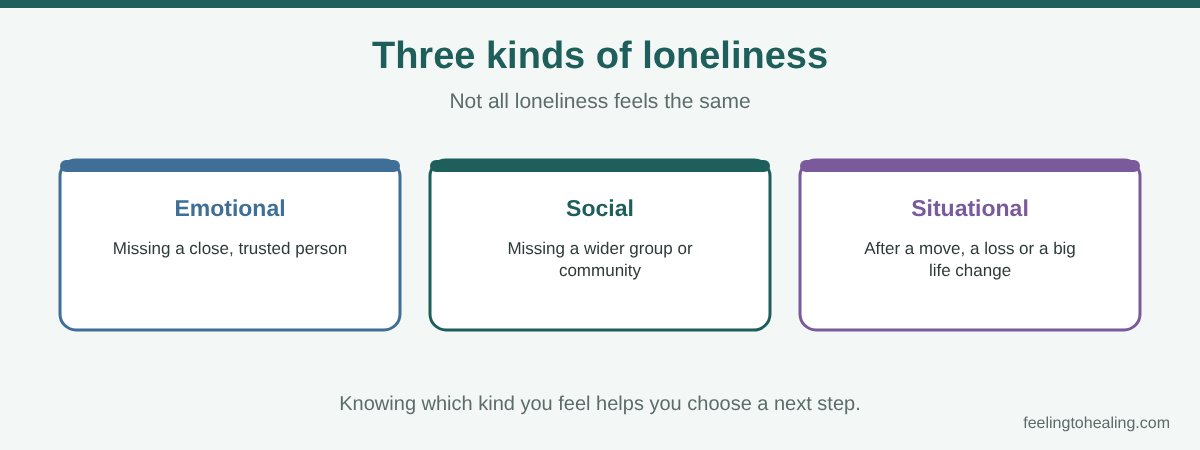
Many people describe emotional loneliness, which is missing a close, trusted person, and social loneliness, which is missing a wider group or community. You can feel one without the other, and each needs a slightly different kind of support.
Signs You May Be Feeling Lonely
- In your feelings: a sense of emptiness, sadness or being left out, even in company.
- In your thoughts: “nobody really knows me”, “I do not fit in”, or “no one would notice if I were gone”.
- In your behaviour: withdrawing from people, turning down invitations, spending long hours online, or keeping busy to avoid the quiet.
- In your body: poor sleep, tiredness, low energy and a heavy feeling that is hard to explain.
If you often have thoughts of harming yourself, please reach out to Samaritans on 116 123 or call 999 in an emergency. You deserve support.
Who Feels Lonely?
Anyone can. Young adults often report some of the highest levels of loneliness, especially after leaving home or starting work. New parents may feel cut off from their old lives. Older people may lose partners and friends. People who live or work remotely, or have moved abroad, can go days without a real conversation. Men are sometimes less likely to talk about it, which our page on men’s issues explores.
Feeling lonely says nothing about how likeable you are. It says that you are a social being whose needs are not being met right now.
Causes of Loneliness
There is rarely a single cause. The causes often include life changes and long-standing patterns:
- Life changes: moving to a new city or country, starting or leaving a job, retirement, becoming a parent, divorce or a breakup.
- Loss: bereavement, the end of a friendship or losing a community. See our page on grief counselling.
- Working from home or studying online: fewer chance meetings and less everyday contact.
- Health and mobility: long-term illness, disability or low energy can make socialising harder.
- Mental health: low mood, anxiety and low confidence can make it hard to reach out. See social anxiety and therapy for depression.
- Feeling different: being new to a country, culture or language, or feeling that you do not fit in.
Effects of Loneliness on Mood and Health
When it lasts, it can affect more than your feelings. It is linked to low mood, anxiety, poor sleep and a lower sense of self-worth. Research also links long-term loneliness with poorer physical health. This does not mean you are doomed, only that connection matters, and that the feeling is worth taking seriously. Our page on low self-esteem may help if you also feel that you are not good enough.
Common Myths
- “Lonely people are shy or unlikeable.” It affects confident, popular and successful people too.
- “If I had more friends, it would be solved.” Quality matters more than quantity. One close, honest connection can change how you feel.
- “I should be able to fix this myself.” Reaching out is a strength. Many people find it hard to take the first step alone.
- “Social media keeps me connected.” Online contact can help, but scrolling alone can also leave you feeling more left out.
There is also a difference between short-term and chronic loneliness. A lonely spell after a move or a loss is understandable and often eases as you settle. Chronic loneliness lasts, and it tends to bring a habit of expecting the worst from other people. That habit, more than a lack of company, is often what therapy helps to change.
Why Loneliness Keeps Going
It can build on itself. When you feel lonely, your mind becomes more alert to rejection. You may expect that people will not want you around, so you hold back, say no or stay quiet. People then see less of you, contact falls, and the feeling grows. It feels like proof that you do not belong, even though it began as a natural reaction to feeling left out.
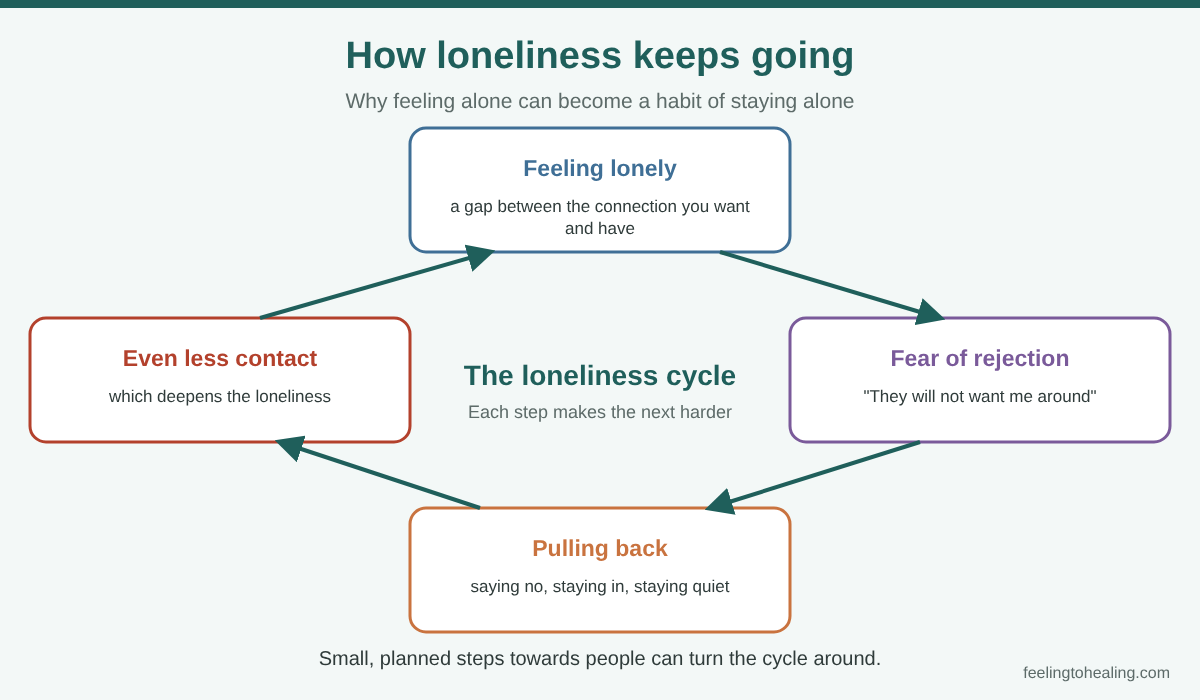
The good news is that a cycle can be turned around. Small, gentle steps towards people, taken at your own pace, can slowly change both how you feel and how others respond.
How to Cope with Loneliness
Coping starts with being kind to yourself, since the feeling is not your fault. These steps help many people:
- Name it. Telling yourself “I feel lonely, and that is human” reduces shame.
- Start small. Send one message, wave to a neighbour or say hello at the shop.
- Build a routine. A weekly class, walk or group means regular contact without having to plan it.
- Deepen one connection. One honest friendship is worth more than many shallow ones.
- Give and volunteer. Helping others brings purpose and natural contact.
- Notice unhelpful thoughts. If you catch yourself predicting rejection, test the prediction with a small step.
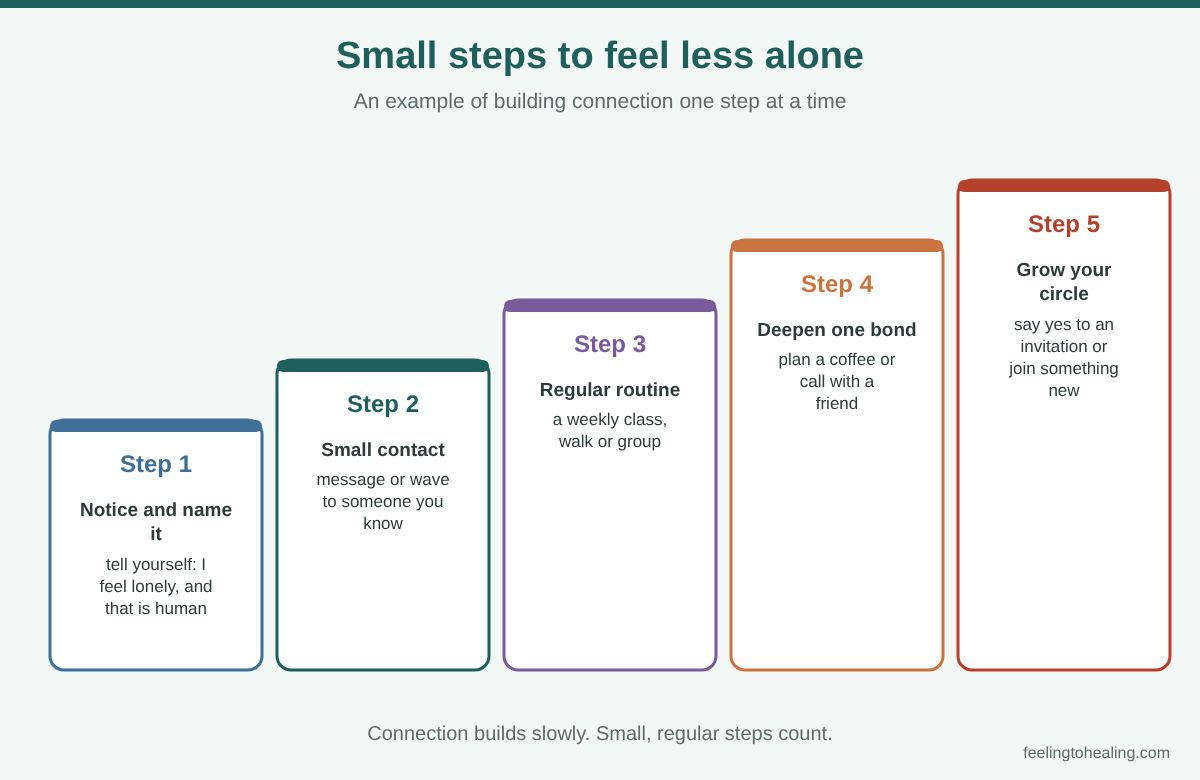
If these steps feel too hard on your own, that is a sign that support could help, not that you have failed. A therapist can walk through each step with you.
Try not to measure your progress by how many people you see. Some days a short, friendly exchange is a big step. Over time, small moments of contact add up, trust grows and the sense of belonging returns. Setbacks, such as an unanswered message, are normal and do not mean you have failed.
Therapy for Loneliness
Talking therapy gives you a steady, non-judgemental relationship in which to explore why connection feels hard. Our counselling service offers a warm space to talk about loss, change and the feeling of being on the outside. Cognitive behavioural therapy (CBT) helps you spot and test thoughts such as “nobody wants me around”, and plan gradual steps to connect. Read more about cognitive behavioural therapy.
Be heard
You have a safe space where someone listens and understands.
Understand it
You explore why it started and what keeps it going.
Test the fears
You look at predictions of rejection and try small experiments.
Build connection
You plan steps to reconnect with people, at your pace.
Therapy is one to one, and sessions last 55 minutes. We offer talking therapy only and do not prescribe medication. If you are thinking about medication, please speak to your GP.
Therapy can also help with the practical side of connection, such as how to start a conversation, how to say what you need, and how to cope when plans fall through. You can rehearse these things in a safe space before trying them in real life.
Your First Session
You begin with a free 20-minute consultation to see if you feel comfortable with us. In your first full session we talk about what life looks like now, when the lonely feelings started and what you would like to be different. You are never judged, and you go at your own pace. You leave with a clearer picture of what is going on and a few simple things to try. Together we agree goals and how often to meet.
Online or in London
You can have therapy by secure video from anywhere in the world, in English, or in person at our clinic at 106 Empress Avenue, London E12 5EU. Online therapy can be a valuable first step if leaving the house feels hard, if you live far from friends, or if you have moved to a new country. We send a session joining link with a reminder, and sessions are not recorded. Read more on our telehealth page.
Everyday Habits That Help
- Plan something regular. Put one social or community activity in your diary each week.
- Get outside. Daylight, fresh air and a walk lift mood and bring you near other people.
- Limit passive scrolling. Social media can make you feel more left out. Try a message, not a scroll.
- Reach out first. Many people are waiting to be invited. A short text can start a conversation.
- Look after yourself. Regular sleep, meals and movement support your mood.
- Be patient. Friendships grow slowly, and quality matters more than speed.
Supporting Someone Who Feels Lonely
If someone you care about seems lonely, keep in touch, even if they say no sometimes. Offer small, easy invitations. Listen without trying to fix it, and avoid telling them to “just get out more”. Gently encourage them to seek help if they are struggling, and share this page if it helps.
Connecting at Your Own Pace
Connection does not have to mean big social events. A short chat with a neighbour, a message to an old friend, a class, a volunteering shift or a regular walk in the same park can all start to rebuild a sense of belonging. Choose one small step that feels manageable this week, and repeat it, because familiarity is what makes connection grow.
Expect some awkwardness. Most people are glad to be asked, and many are waiting for someone else to make the first move.
Fees
Your first 20-minute consultation is free. Sessions last 55 minutes, and our session fees are on our fees page. We do not bill insurance companies. You pay us directly and receive a receipt after each session, which you can send to your insurer if your policy covers therapy.
Loneliness: Frequently Asked Questions
What is loneliness?
Loneliness is the painful feeling of a gap between the connection you want and the connection you have. You can feel it alone or in a crowd, and it is a very common human experience.
Why do I feel lonely even when I am around people?
It is about feeling understood and valued, not about how many people are near you. You can feel unseen in a busy room or even in a relationship.
What are the causes of loneliness?
Common causes include life changes such as moving or retiring, loss, working from home, health problems, low mood or anxiety, and feeling different from those around you.
Is this feeling a mental illness?
No. It is not a diagnosis, but it is linked to low mood, anxiety and poorer health, and therapy can help whether or not you have another condition.
How can I cope with this feeling?
Start with small steps such as sending a message, joining a regular activity and deepening one friendship. Being kind to yourself matters too. If it feels too hard alone, therapy can help.
Is it normal to feel lonely in a relationship?
Yes. You can feel lonely even with a partner or family if you do not feel understood. Couples therapy or individual counselling can help. See our page on couple therapy.
Why does feeling lonely make it harder to meet people?
It makes the brain more alert to rejection, so you may hold back or expect the worst. That creates less contact, which feeds the feeling. Small steps can reverse the cycle.
Can feeling lonely cause depression or anxiety?
It can contribute to both, and both can make loneliness worse. Treating one often helps the other.
Can therapy help?
Yes. Therapy offers a safe relationship, helps you understand the causes and tests the fears that hold you back. It can also help you plan steps towards connection.
What is the best therapy for feeling lonely?
Counselling and CBT are both helpful. Counselling helps you talk through loss and change, and CBT helps you test unhelpful thoughts and plan gradual steps to connect.
Can I have therapy online?
Yes. Sessions are by secure video, in English, for adults anywhere in the world. You can also come to our East London clinic.
How long does therapy take?
It varies from person to person. We agree a plan with you in the first sessions and review it as you go.
Do you prescribe medication?
No. We offer talking therapy only and do not prescribe or advise on medication. If you are considering medication, please speak to your GP.
Can children or teenagers be seen?
No. Our service is for adults only.
Is therapy confidential?
Yes. What you tell your therapist is private. There are rare legal limits, for example where someone is at serious risk of harm, and your therapist explains these in your first session.
How much does therapy cost?
Your first 20-minute consultation is free. Sessions last 55 minutes and our session fees are on our fees page. We do not bill insurance companies. You pay us directly and receive a receipt after each session, which you can send to your insurer if your policy covers therapy.
How do I book?
Start with a free 20-minute consultation. You can book online, call us on +44 203 996 1510 or send a message through our contact page.
You Do Not Have to Feel This Alone
Book your free 20-minute consultation to talk about how you feel and what could help. It is confidential, and you will be listened to without judgement.
You may also find these helpful: social anxiety, low self-esteem, therapy for depression, grief counselling, online therapy and our FAQs.
This page is for general information and is not a substitute for professional medical advice, diagnosis or treatment. Last updated November 2026.